
People who invest money are getting mixed messages about the economy from recent reports. This confusion even led President Trump to remove the head of the Bureau of Labor Statistics. The newest job numbers looked weak and had to be corrected downward, but other data showed the economy grew faster in the second quarter. Company profits are still beating what experts expected, pushing stock markets to record highs. However, tariffs and rising prices remain worries.
These different signals make it hard for investors and government leaders to know what’s really happening. This makes financial decisions tough when people question whether the numbers are right.
The problem isn’t just that different reports tell different stories today. Understanding the economy is never as easy as looking at just one or two numbers. Learning how to read economic data is important for making smart choices about jobs, rising prices, how productive workers are, government spending, and much more.
Instead of reacting to single reports, smart investing means knowing how much importance to give each report and looking for bigger patterns. In today’s uncertain economic times, what should investors watch as they handle their money and financial plans?
Job numbers show worrying signs about the economy
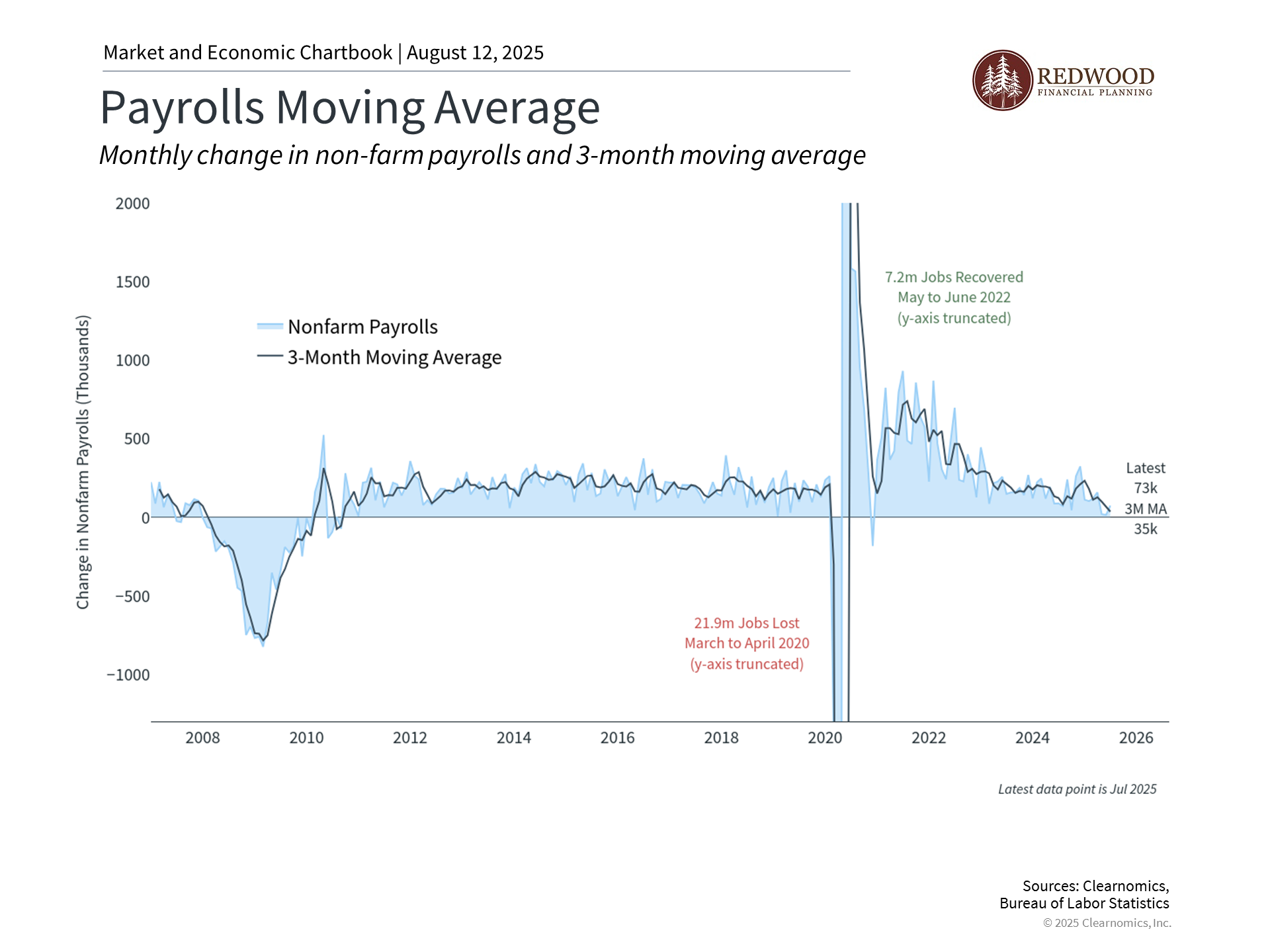
The most recent jobs report caused worry when it showed only 73,000 new jobs were created in July. This was much lower than what economists thought would happen. Also, the government had to lower the job numbers for May and June by a total of 258,000 jobs. This means the economy was much weaker in recent months than we first thought.
These big changes have made people worry about whether government numbers can be trusted. This is a problem because government data is what we use to understand how the economy is doing. Whether it’s job numbers from the Bureau of Labor Statistics, economic growth calculations from the Bureau of Economic Analysis, or price increase measures from different government agencies, these numbers guide everything from Federal Reserve decisions to investment choices.
In today’s divided political environment, whether this data is reliable matters even more. So, it’s important to understand some key facts.
Economic information is the base for investment choices
First, why is this a problem? Some things in life are easy enough to count exactly. For example, how many workers a company has, how many people got laid off, or the average size of yearly pay raises can all be figured out very accurately. But when it comes to measuring these numbers across tens of millions of companies or hundreds of millions of people, counting everything is not just hard but might be impossible. This is when statistics and educated guessing are needed.
So, government data sources, like any statistical information, are not perfect. The numbers come from surveys of thousands of businesses and households. Professional data collectors do these surveys and statisticians and economists study the results. The results are only as good as the surveys and methods used. They should always be seen as estimates rather than exact counts.
Second, there is a balance between getting information quickly, which investors and policymakers want, and getting it right, which takes time and more information. Government economic reports come out on set schedules and then get updated several times as new data becomes available. This updating process is actually good because it allows for better accuracy over time. However, it does mean that no single number should be taken as the final truth.
Despite these limits, U.S. government data is considered the best in the business when compared to other countries. These agencies keep high standards and are the main source for many economic indicators. While their methods can always get better (and often do), the agencies are run by professionals who have worked under many different presidents.
Finally, tension between politics and government data can’t be avoided. On one hand, there are strong reasons to show the economy in the best light. On the other hand, it’s hard to prove whether an economic report is influenced by politics. This has been true across many different political situations.
Looking at the big economic picture is important
Because of these challenges, it’s important to look at many viewpoints, including both government and private data, to get a clearer understanding of the economy. In investment research, this is often called “mosaic theory.” This means that different pieces of information can form a complete picture. Jobs, growth, rising prices, company earnings, and consumer spending from different data sources all provide valuable pieces of the puzzle.
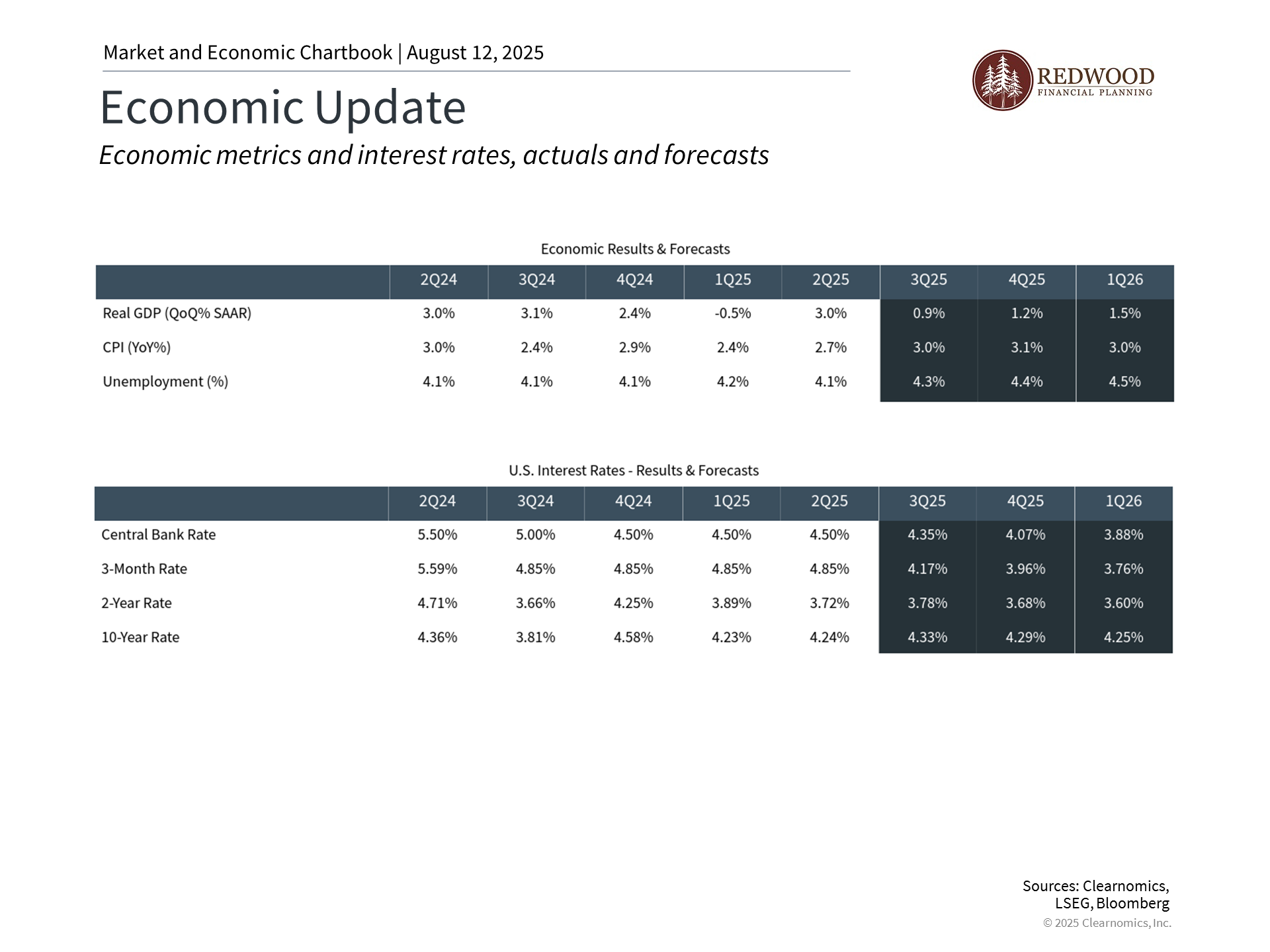
Much of economics involves studying which indicators matter, how much they matter, and when they matter. For example, while the latest job data is weaker than expected, other data suggests that the economy’s total output continues to grow at a healthy pace. Second quarter GDP (Gross Domestic Product – the total value of goods and services produced) growth sped up to 3.0%. This is well above the long-term average and represents a turnaround from first quarter trends.
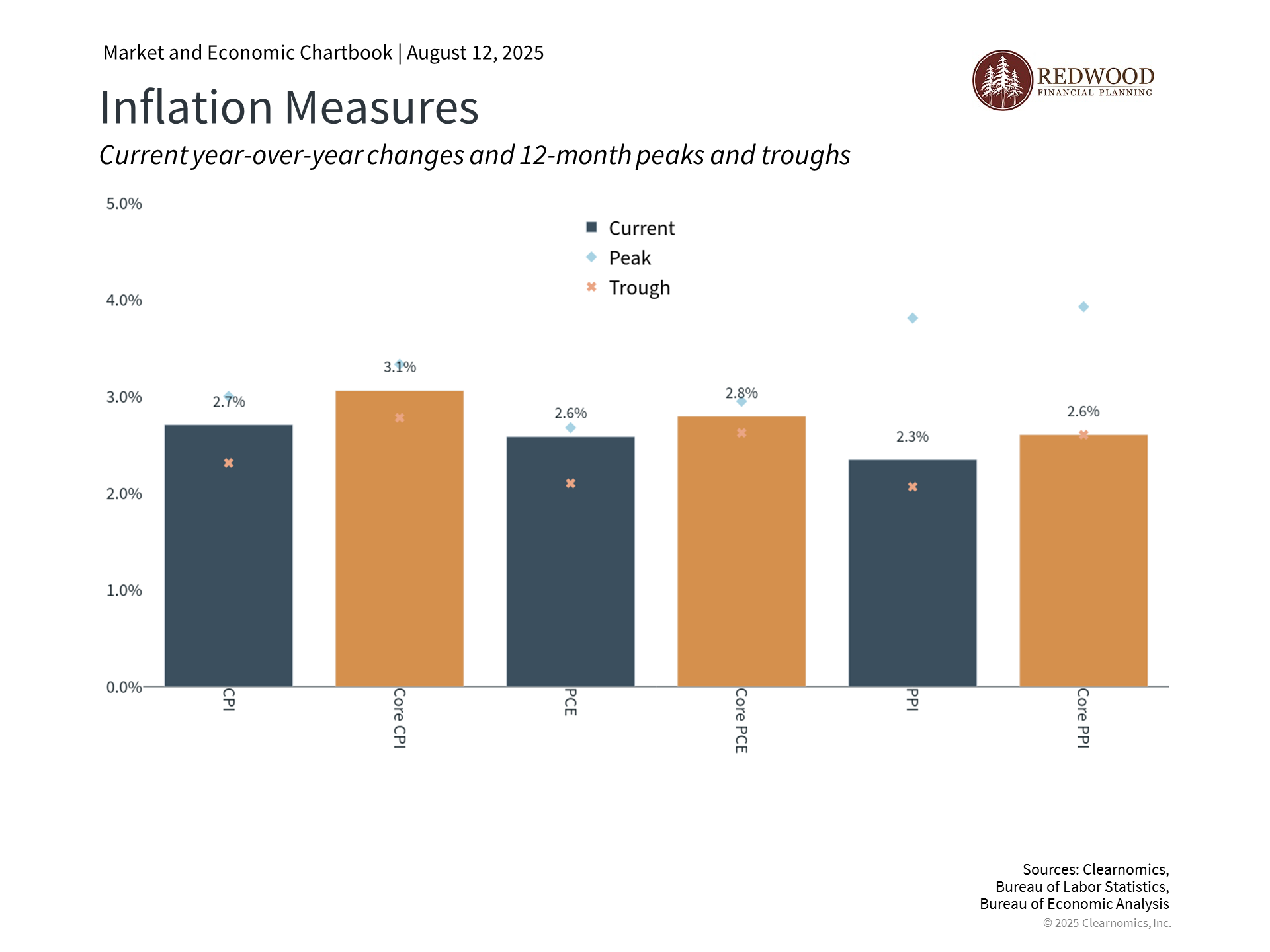
Tariffs (fees on imported goods) remain the unknown factor and are one important reason for mixed views on the economy. Inflation (rising prices) has not yet jumped dramatically as some feared, but it does stay stubbornly above the Fed’s 2% target.
Still, there are early signs that tariffs could be affecting consumer prices. According to the latest Consumer Price Index report, inflation for everyday consumer goods is speeding up even as price pressures for services are easing. Also, the latest Personal Consumption Expenditures numbers show that inflation sped up to 2.6% in June from a year earlier.
For investors, it’s normal for economic numbers to point in slightly different directions and even seem to contradict each other at times. This is sometimes due to economic uncertainty and at other times due to measurement challenges. Regardless, it is the longer-term direction of the economy that really matters for investors. Using different data sources is key to understanding the bigger picture.
The bottom line?
The latest jobs report has raised questions about whether government data can be trusted. Investors should understand both the uses and limits of this data. Keeping a broader view based on many different data sources is the best way to make long-term investment decisions.

