
Recent events involving Venezuelan President Nicolás Maduro’s detention by U.S. forces mark a noteworthy geopolitical development. According to widespread reports, U.S. military personnel carried out an operation that resulted in Maduro’s arrest on allegations of drug trafficking and corruption. In remarks during a press conference, President Trump indicated the United States would assume control of Venezuela and pursue expanded oil production in the country.
While the primary concerns revolve around humanitarian outcomes and regional geopolitical dynamics for Venezuela and surrounding nations, market participants may understandably question how these developments affect investment portfolios. This situation prompts numerous considerations regarding U.S. regional involvement, prospects for democratic governance in Venezuela, narcotics trafficking implications, potential oil production increases, and the influence of nations such as Iran and China in the area.
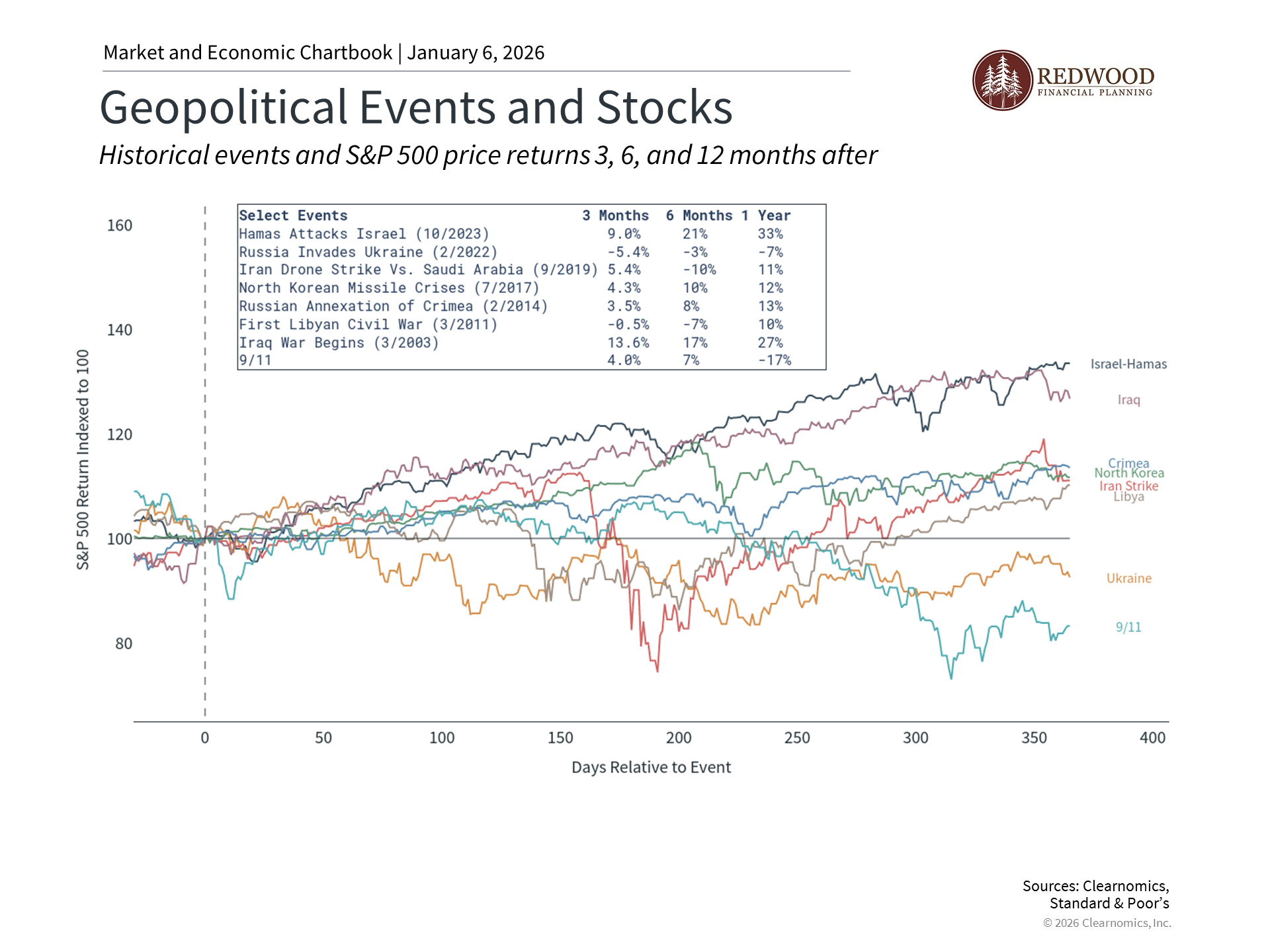
Looking at historical patterns offers valuable insight: geopolitical developments frequently generate near-term market fluctuations, yet their lasting market effects are generally modest. This occurs because such events rarely alter the trajectory of fundamental economic and market forces, even when oil production faces disruption. Recent geopolitical tensions, including those in Ukraine and the Middle East, have demonstrated this pattern. Recognizing these historical tendencies helps investors maintain appropriate perspective and concentrate on elements that have traditionally influenced market outcomes.
Context from past U.S. regional involvement
Understanding U.S. engagement in Latin America requires examining historical precedent, as the conversation surrounding intervention in Venezuela encompasses multiple dimensions from international law to regional security. The Monroe Doctrine, initially declared by President James Monroe in 1823, asserted that European nations should refrain from interference throughout the Western Hemisphere. When applied to current circumstances, this doctrine implies South America falls within the nation’s sphere of influence, meaning hostile actions in the region would be interpreted as directed at the United States. President Trump has referenced this concept, recently characterizing his foreign policy approach as the “Don-roe Doctrine.”
U.S. intervention in Latin American nations has occurred previously on multiple occasions. Notably, in 1990—precisely 36 years prior to the current date—U.S. forces apprehended Manuel Noriega in Panama on drug trafficking allegations. Although the recent Venezuelan operation came as a surprise to many, Maduro has faced U.S. Department of Justice indictment since 2020 on narco-terrorism and drug trafficking counts. During the Biden administration, sanctions against Venezuela remained in place, and in early 2025, a $25 million reward was offered for Maduro’s capture, subsequently increased to $50 million under the Trump administration.
Similar to other U.S. military and law enforcement operations, multiple interconnected goals exist. The official justification centered on combating narco-terrorism, the basis for criminal charges against Maduro and 14 Venezuelan officials filed by the U.S. in 2020. The widespread international view that Maduro’s leadership lacks legitimacy, following the nation’s 2024 election, reinforces this rationale. Before the administrations of Maduro and Hugo Chávez, Venezuela functioned as a democracy and ranked among the region’s most prosperous nations.
For those investing with extended time horizons, the crucial takeaway is that geopolitical uncertainty represents a consistent element of investing, despite varying circumstances in each instance. These developments may also generate heightened concern since they diverge from typical business coverage regarding corporate earnings and economic indicators. The accompanying chart illustrates numerous major geopolitical events spanning recent decades. Across most instances, markets rebounded within weeks or months, if they experienced any impact whatsoever.
Energy markets link geopolitical events to portfolios
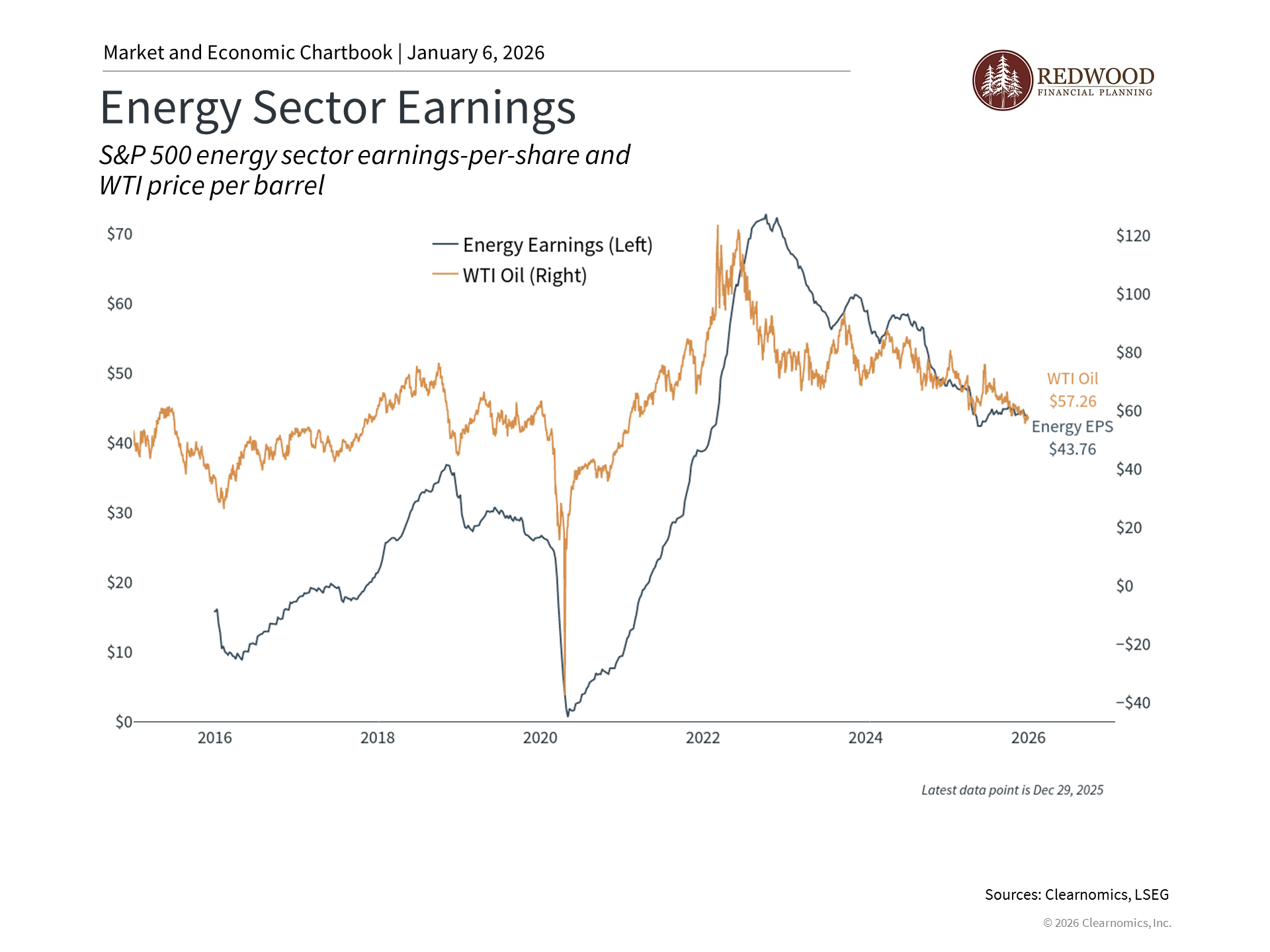
From an investment perspective, the impact on energy markets represents perhaps the most significant consideration. This stems from the fact that commodity prices, particularly oil, serve as the primary transmission mechanism through which geopolitical developments influence financial markets, and petroleum remains fundamental to worldwide economic activity. Venezuela holds importance in this context as the nation holds the world’s largest confirmed oil reserves at roughly 304 billion barrels, based on U.S. Energy Information Administration data. For comparison, this surpasses even Saudi Arabia’s reserves of 267 billion barrels.
However, despite these substantial reserves, Venezuela’s actual oil output remains well below other major producers. Venezuelan production has experienced severe decline over recent decades due to poor management, insufficient infrastructure investment, and economic sanctions. Currently, production stands at under 1 million barrels daily, contrasted with U.S. output approaching 14 million.1 Should Venezuelan production expand, meaningful additions to global supply will likely require substantial time and capital investment. This diminishes any immediate market impact.
Looking ahead, U.S. energy firms may find opportunities to gain greater access to these reserves, though lower oil prices resulting from increased supply might partially counterbalance this benefit. For the overall economy and consumers, any market disruption could prove beneficial since expanded Venezuelan production would likely exert downward pressure on oil prices over time. This distinguishes it from conflicts such as Russia’s 2022 invasion of Ukraine, which disrupted existing supply chains and pushed oil prices to nearly $128 per barrel. That scenario intensified post-pandemic inflation and drove average U.S. gasoline prices above $5 per gallon.
Present oil prices remain well below those peak levels. Indeed, prices have stayed relatively subdued throughout the past year, with WTI crude trading under $60 per barrel and Brent crude hovering around that threshold. According to available information, OPEC+ countries’ immediate response to recent Venezuelan developments has been maintaining existing production quotas, indicating they are assessing the situation before implementing strategic changes. The fact that the U.S. currently ranks as the world’s largest oil and gas producer further diminishes domestic economic impact.
Nevertheless, it’s worth noting that energy price forecasting involves considerable difficulty, and the U.S. maintains dependence on crude imports. Following Russia’s invasion of Ukraine, many analysts anticipated indefinitely elevated oil and natural gas prices, particularly given projections of a severe European winter. Yet prices stabilized and declined much earlier than many expected. This serves as a reminder that, because oil functions as a global commodity, numerous factors can unexpectedly influence pricing dynamics.
Limited direct market exposure to Venezuela
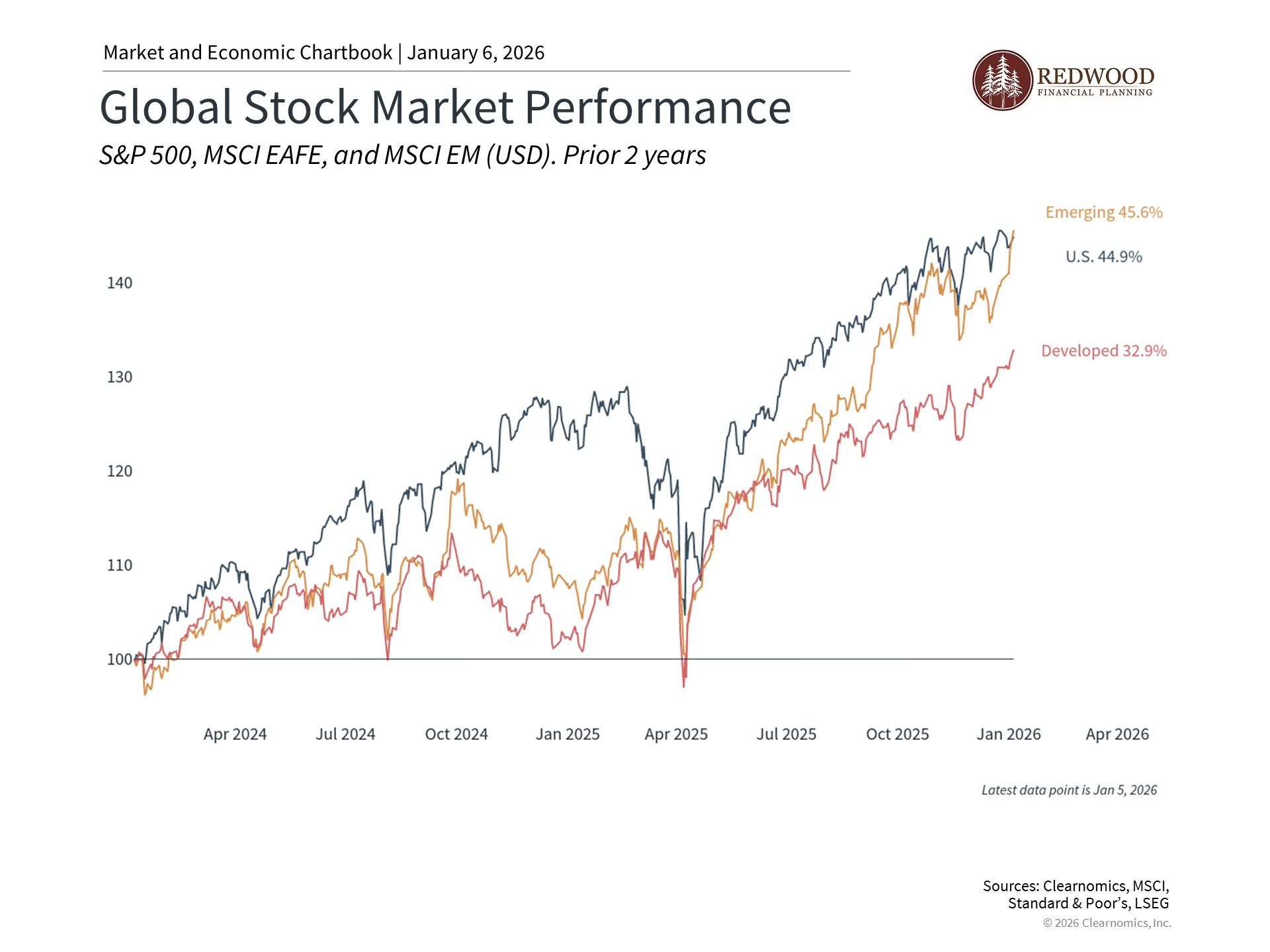
An additional important consideration for investors is Venezuela’s negligible presence in global financial markets. The country’s equity market, the Bolsa de Valores de Caracas, remains small and illiquid with limited international participation. It lacks inclusion in the MSCI Emerging Markets Index, meaning most global investors maintain minimal or zero direct exposure to Venezuelan equities. The nation’s economic deterioration throughout the past decade has effectively eliminated it from emerging market investment portfolios.
Regarding fixed income markets, Venezuela has remained in default since 2017 following missed debt payments. Bondholders continue negotiating restructuring arrangements, though the bonds trade at severely distressed valuations reflecting expectations of substantial losses.
The Venezuelan situation will continue developing, and additional market-moving developments may emerge. Indirect effects through oil prices and general uncertainty will likely exceed direct impacts from the country’s financial markets. Rather than attempting to forecast precisely how circumstances might unfold, investors should prioritize ensuring their portfolios align with their financial objectives.
The bottom line?
The detention of Venezuela’s president constitutes a major geopolitical event with important humanitarian and regional consequences. However, historical evidence demonstrates that portfolios constructed around long-term financial objectives can successfully navigate geopolitical uncertainty.

