
The baseball player Yogi Berra once said that “a nickel ain’t worth a dime anymore.” With inflation still elevated, many people may be feeling this way as well. Not only are everyday costs higher due to energy prices, but short-term interest rates have fallen over the past two years.
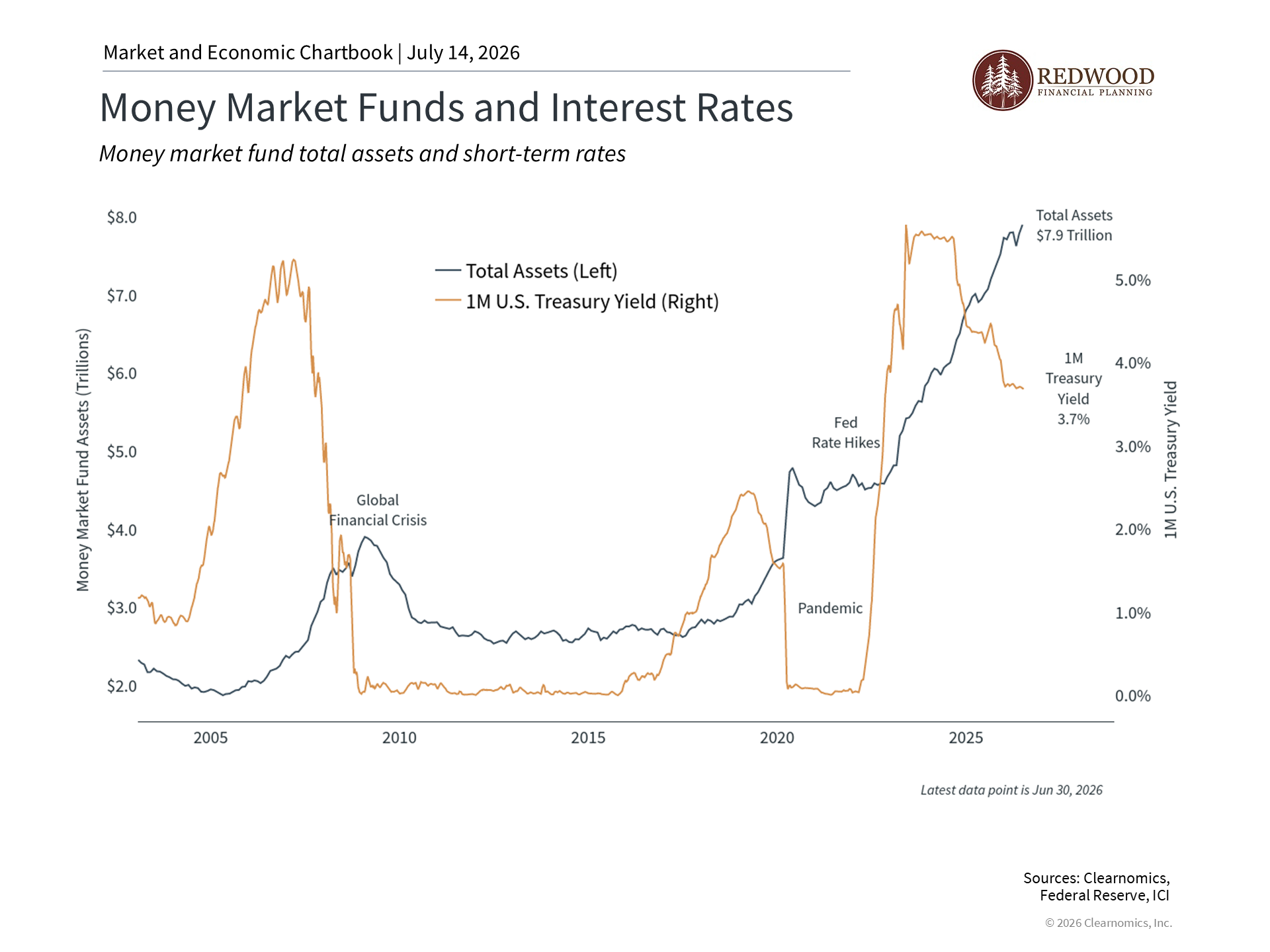
For people holding a significant portion of their portfolios in cash, the purchasing power of their savings is declining on two fronts: rising prices and falling cash yields. With money market fund assets near record highs at $7.9 trillion, it is likely that many people are carrying cash allocations that exceed what their financial plans actually require.1
Managing cash requires careful planning
Cash serves many purposes across portfolios, financial plans, and everyday life, making it a nuanced topic. Holding too much of it, however, carries real long-term costs that are easy to overlook. Because cash feels safe, particularly compared to the daily volatility of the stock market, people may not notice the drag it places on wealth accumulation. Unlike stocks, bonds, and other assets, the value of cash does not compound meaningfully over time.
From an investing and financial planning perspective, the term “cash” is often used as shorthand for any liquid, short-term holding or vehicle. Common examples include savings accounts, money market funds, certificates of deposit (CDs), and similar instruments. These serve legitimate and important purposes, such as covering near-term expenses, building an emergency fund, saving for a home down payment, or setting aside funds for tuition payments. All of these are valid uses of cash within a broader financial plan.
The key question is not whether to hold cash, but how much is appropriate given an your goals, time horizon, and overall portfolio. Excess cash is sometimes described as “cash on the sidelines” because it is not actively growing, paying dividends, or receiving bond coupons.
As the accompanying chart illustrates, money market fund assets remain at record levels following their climb alongside interest rates a few years ago. Elevated short-term interest rates can appear attractive, particularly when the stock market seems volatile. However, because these rates are short-term in nature, they are not locked in, creating what is often refer to as “reinvestment risk.” To keep pace with inflation and support financial goals, this cash needs to be deployed into asset classes with the appropriate characteristics.
This is especially relevant today, given that short-term rates have already declined. People who moved to cash are not only experiencing lower yields but have most likely missed a significant portion of the broader market rally over the past few years.
Inflation quietly erodes the value of cash
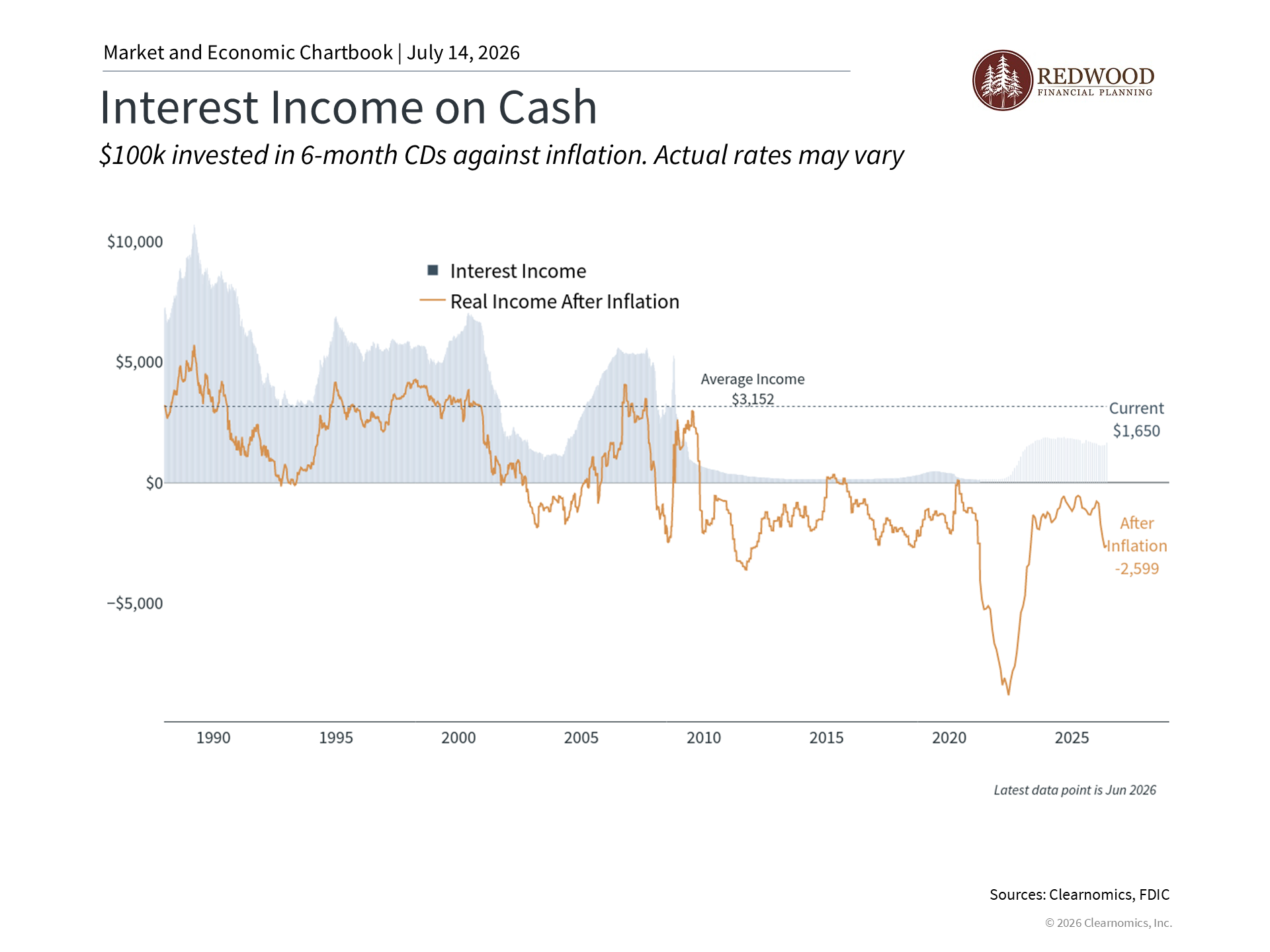
One common misconception about cash is that it is truly risk-free. While a bank account balance does not fluctuate the way the stock market does, its real value can still decline over time. The purchasing power of cash is what matters, and inflation steadily erodes that purchasing power. This effect may appear small in any given year, but it compounds over years and decades unless interest payments or asset appreciation are sufficient to offset it.
As the chart above shows, the inflation-adjusted return on cash, measured using current CD rates according to the FDIC, has been negative for most of the past two decades.2 In other words, even during periods when cash appeared to be generating income, inflation was running ahead of it. With headline inflation currently at 4.2% and the one-month Treasury yield at 3.7%, real cash yields remain negative today by many measures.3
Money market funds, savings accounts, and short-term CDs must also be rolled over regularly as they mature. This reinvestment risk requires ongoing management and is subject to shifting market and economic conditions. As a result, many of the same factors that influence stocks and bonds also affect the yields available on cash instruments.
Stocks and bonds support long-term growth
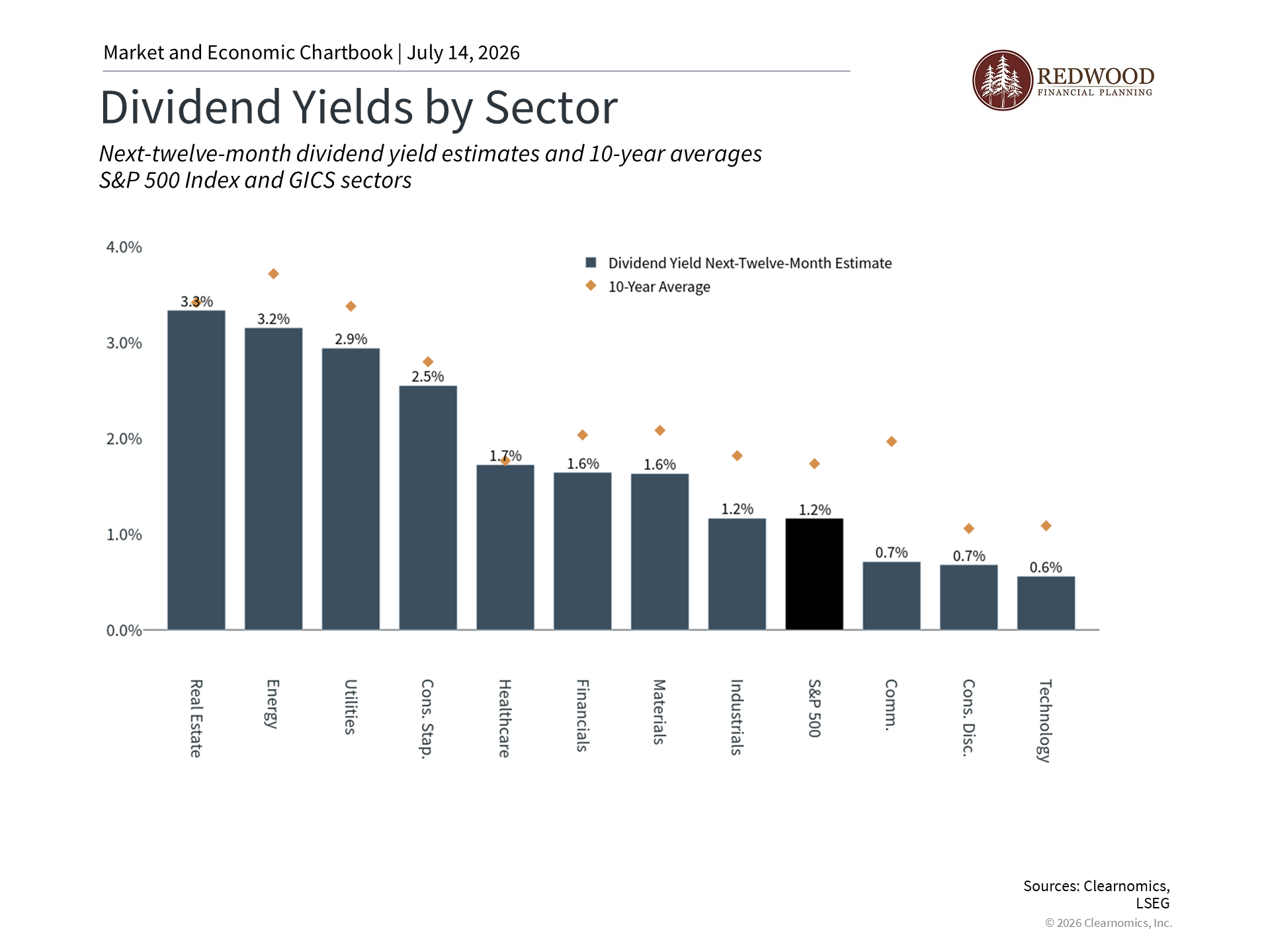
Stocks and bonds have traditionally served as the foundations of portfolios because they can generate both long-term growth and income. Dividend-paying stocks, for instance, offer income alongside the potential for capital appreciation. While dividends are not guaranteed in the same way that bond coupons are, sectors of the S&P 500 such as Real Estate, Energy, and Utilities currently offer yields above 3%, which is comparable to many shorter-term cash and bond instruments.
Extending the maturity on bonds can also result in more attractive interest rates. For instance, the 2-year Treasury yield is currently around 4.2%, representing both a meaningful increase over short-term cash yields and a level that matches the latest inflation figures. Investment grade corporate bonds currently yield 5.3% on average, compared to a historical level of 3.9%. The Bloomberg U.S. Aggregate Bond Index yields 4.8%, more than one and a half times its average since 2009. Unlike cash, bonds can also gain in value in ways that help balance the rest of a portfolio.
Ultimately, history demonstrates that a portfolio with the right mix of asset classes can not only outpace inflation over time but can compound in ways that support long-term financial goals. This is not an argument against holding cash, but rather a reminder that cash in a portfolio is best suited to serving specific, near-term needs. For people who have accumulated excess cash over the past few years, putting it to work in a thoughtful and deliberate manner is an important next step.
The bottom line
Cash plays an important role in financial planning, but holding too much comes with long-term trade-offs. Staying invested in a diversified portfolio of stocks and bonds remains the best way to work toward long-term financial goals.
References
1. https://www.ici.org/research/stats/mmf
2. https://www.fdic.gov/national-rates-and-rate-caps
3. https://home.treasury.gov/policy-issues/financing-the-government/interest-rate-statistics


