
Quick take:
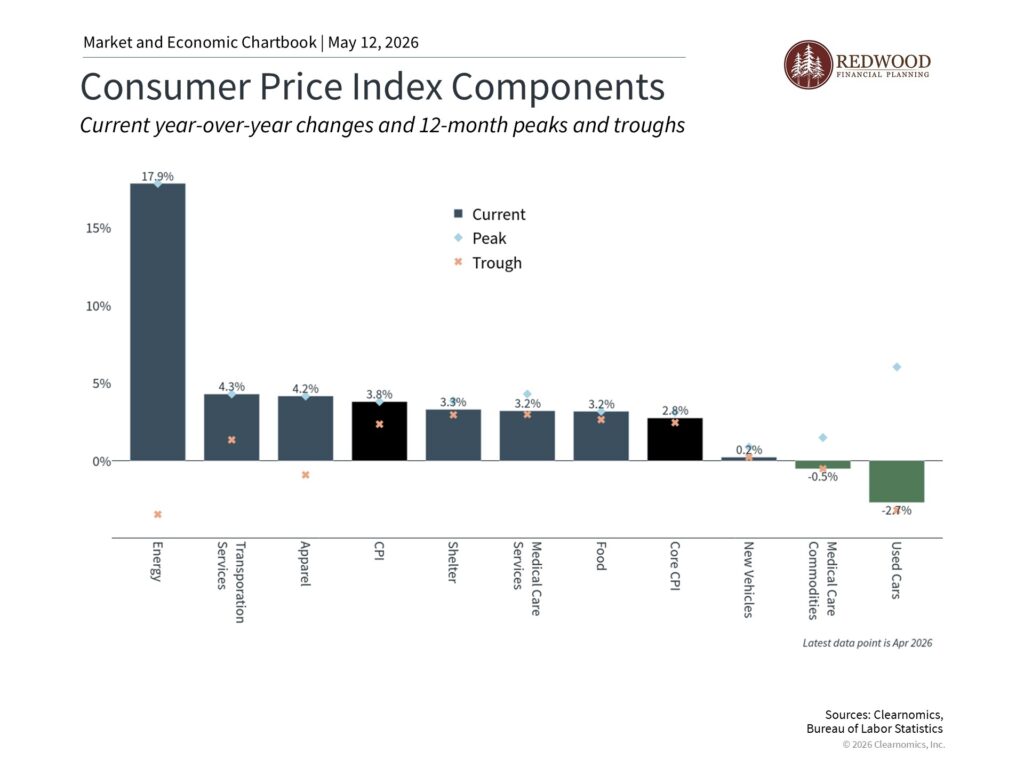
- Headline inflation rose 3.8% year over year in April—the highest since mid-2023.
- The spike is concentrated in energy, not broad-based across the economy.
- Markets have held up, underscoring the value of diversification.
What’s behind the move:
- Energy led the increase. Gasoline prices rose 28.4% year over year. Overall energy is up 17.9%, and fuel oil jumped 54.3%. The main driver: disrupted oil flows through the Strait of Hormuz, a key global shipping route.
- Core inflation (which excludes food and energy) is up 2.8%. A narrower “supercore” measure that excludes food, shelter, and energy is 2.3%. This suggests broader price pressures remain more contained.
- The risk to watch is persistently high energy. If energy stays elevated, it can ripple into other categories like transportation services. Oil prices have been volatile, swinging from about $90 to $118 per barrel over the past month, largely tied to geopolitical tensions in the region.
What the Fed did:
- The Federal Reserve kept rates steady at 3.5%–3.75% in April, as inflation remains above its 2% target. This makes near-term rate cuts less likely, though the path forward will depend on incoming data and policy leadership.
How markets reacted:
- Despite the headlines, the S&P 500 is positive this year. Energy stocks are up over 25%, and broad commodities have gained around 30%. Different parts of the market are responding differently—exactly why we diversify.
What this means for your plan:
- This is primarily an energy story, not an economy-wide surge. Historically, supply-driven energy shocks are often followed by normalization as supply adjusts.
- Your portfolio should be built for environments like this. It’s important to diversify across sectors and asset classes so strength in one area can offset weakness in another.
- Watch the data. If the facts change in a way that impacts your long-term plan, you should adjust thoughtfully—not reactively.
Bottom line:
Short-term inflation spikes—especially those driven by energy—can feel unsettling. But your plan isn’t built on headlines; it’s built on goals, time horizons, and disciplined diversification. That’s what has worked over full cycles, and it’s the approach we’ll continue to follow.


